San Francisco Chronicle wins May Sidney for Exposing Preventable Deaths in ICE Custody
NEW YORK — St. John Barned-Smith and Ko Lyn Cheang of the San Francisco Chronicle win the May Sidney for exposing the medical neglect behind deaths of detainees in ICE custody.
The reporters obtained medical records and other documentation for all 48 people who have died in ICE detention at time of publication since January 2025. Independent physicians reviewed these files and determined that patients’ lives could have been saved in more than half of the 32 cases where documentation is sufficient to make an assessment.
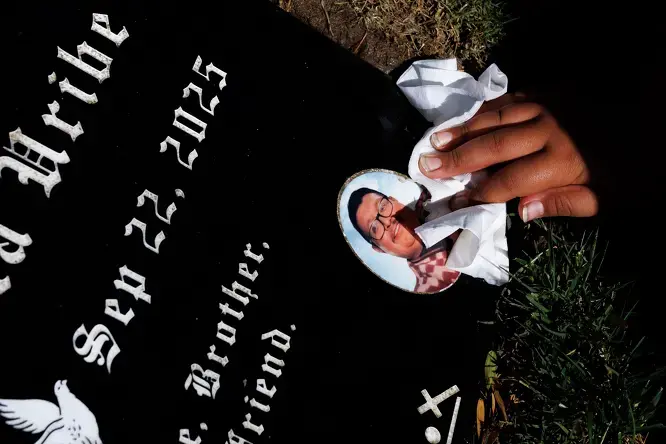
Thirty-nine-year-old Ismael Ayala-Uribe complained of agonizing rectal pain in a California detention center. He was sent back to his cell with fiber supplements and no physical examination. After days of agony, he died of an abscess that could have been cured with antibiotics.
Luis Beltran Yanez Cruz told staff he felt like he had symptoms that doctors said could signal a heart attack. But he was not sent to a hospital for weeks, where he died shortly after from a heart attack.
Ukrainian refugee Maksym Chernyak had six seizures in front of staff before anyone called emergency services. He died of a stroke. A 45-year-old man died of complications of HIV after not receiving antiviral medication for months.
Just nine of the more than 220 immigration detention facilities across the country accounted for half the deaths since the beginning of 2025, the Chronicle found.
The Trump administration has gutted watchdog detention agencies and made ICE detainee death reports shorter and less detailed, making it very difficult to assess what is really happening.
“This reporting exposes egregious medical neglect of ICE detainees,” said Sidney judge Lindsay Beyerstein. “The US government is failing to maintain a minimal standard of care for these human beings. People are dying from preventable causes in federal custody.”
Backstory
Q: How did you report this story?
A: Last year, my colleague Ko Lyn noticed the death of an Asian gentleman in an ICE detention facility in California and said, “Hey, I want to look into this.” I suggested that we look at the whole country and that marked the beginning of the process to report this story.
We ended up using what are called detainee death reports, which the government is required to put out after every death of someone in ICE detention. We used those to build a database of everybody who had died in ICE detention since 2018. Then we obtained autopsies through public records or through attorneys, and medical records from attorneys or families. I spent a lot of time reaching out to relatives of people who died. So it was a pretty long, intensive process.
Q: Who was Ismael Ayala-Uribe?
A: Ismael Ayala-Uribe was a 39-year-old man from the Los Angeles area. His case stood out to me because he had been snatched while he was working at a car wash where he’d worked for 15 years. He went into ICE detention and while he was there he started to have very severe rectal pain. When he went to see the doctor about it, he was prescribed stool softeners. I guess because they thought he was constipated, but he was never actually physically examined as far as we can tell. He ended up dying from sepsis, which was caused by an abscess, a pocket full of bacteria filled pus that then flooded his body and poisoned his bloodstream and killed him. The doctors we spoke to said that if there had been a physical examination, it should have been pretty easy to spot this abscess. And what you do is you lance the abscess, drain the pus and the bacteria, give strong antibiotics, and keep it clean. It was a very treatable, preventable death that he went through agonizing, excruciating pain before he died.
Q: He’d lived in the U.S. for most of his life, correct?
A: Ismael had been brought to the US when he was four or five by a relative of his mother, if I recall correctly. All of his relatives were legal citizens. He was a so-called DREAMer. His relatives had been able to regularize their status. He had had a few DWIs and so that prevented him from regularizing his status. But his sister, his younger brother, and his parents are now all either citizens or permanent residents.
Q: Who was Maksym Chernyak?
A: Maksym Chernyak was another detainee. He was detained in Florida. He was a Ukrainian man. He and his domestic partner fled the war in Ukraine and came here. While they were here, they got into a domestic dispute. Police were called to their house and arrested him. His partner tried to bail him out but at that point he’d already been transferred to the Krome Detention Facility in Florida and while he’s there, he experiences high blood pressure. He’s not feeling very well. And if you look in ICE records, it says he had slightly elevated blood pressure. What ended up happening is he had a massive stroke and a series of seizures. While that was going on, ICE detention staff thought he was suffering from a drug overdose or something. They waited a long time, I think more than an hour before getting him to a hospital. By that point he was brain dead. When we showed the records to doctors, they said what ICE had described as slightly elevated blood pressure was in fact very significant, dangerous blood pressure, which if left unchecked would cause exactly what it caused.
Q: Is the quality of medical care in ICE detention deteriorating?
A: Whistleblowers have complained about medical conditions and medical care in ICE detention for years. What is unique about what is happening now is that we saw an influx of detainees into these facilities. Number one, many of these facilities were absolutely just not prepared. Number two, the federal government or the Trump administration has basically shuttered two oversight watchdogs that would typically speak on behalf of detainees and try to make sure they were receiving adequate care: the Office of Civil Rights and the ICE detention ombudsman. A third oversight body is doing fewer inspections of these detention facilities than it used to. Lastly, the federal government, previously the VA, would handle medical claims billing for ICE and that ended in October.
Q: How does the profit motive affect the quality of care that’s delivered in these facilities?
A: A lot of these detainees are in private facilities. There’s obviously an incentive to limit the amount of proper medical care because every dollar you spend on medicine is a dollar less in potential profits. It’s a similar issue for people in private jails or in private prisons. It’s the same sort of concern.
Q: Did anything surprising happen as you were reporting this story?
A: I’ve been a journalist since 2009. I’ve covered a lot of crazy stuff. In Texas, I covered tons of mass shootings and natural disasters and sort of thought I had lost the ability to be surprised. But I found myself at times just shocked reading some of these documents.