CalMatters wins January Sidney for Exposing California’s Flat-Fee Do-Nothing Public Defense Model
NEW YORK — Anat Rubin of CalMatters wins the January Sidney Award for “The WalMart of public defense: How justice gets sold to the lowest bidder in rural California,” an article exposing California’s flat-fee do-nothing public defense model and the havoc it wreaks on poor defendants and the justice system.
California is the birthplace of the public defender. Yet the system allows counties to contract with private firms instead of running a robust public defender’s office as most jurisdictions do. The result is a system dominated by politically-connected low-bid firms who do not effectively represent their clients and distort the entire criminal justice system.
San Benito County hired the law firm of Fitzgerald, Alvarez and Ciummo to handle indigent defense for a flat fee. These attorneys were reluctant to hire investigators or even challenge evidence in court. Several states ban flat-fee contracts for criminal defense for this reason. Yet, nearly half of all California counties, 25 out of 58, hire private law firms to handle indigent defense mostly through flat-fee contracts. Seven of the eight counties with the highest incarceration rates use flat-fee defenders.
Defendants in San Benito County begged their lawyers to file motions challenging evidence or to hire investigators to uncover facts, typically to no avail. In the city of Madera, the Ciummo firm took felony cases to jury trial at a rate half the statewide average.
Public defenders don’t just help poor defendants, they maintain the integrity of the criminal justice system. Police are more likely to follow the law if they expect a defense attorney to challenge them in court. Since most defendants have state-appointed counsel, the quality of public defense sets the tone for the entire system. Sheriff Eric Taylor was alarmed that public defenders weren’t checking his deputies. District attorney Joel Buckingham also worried that his office was sending people to jail who hadn’t been adequately represented by counsel.
“Flat-fee public defense contracts create a two-tiered system of justice,” said Sidney judge Lindsay Beyerstein. “This story sheds light on an issue that affects almost half the counties in California and many other states as well.”
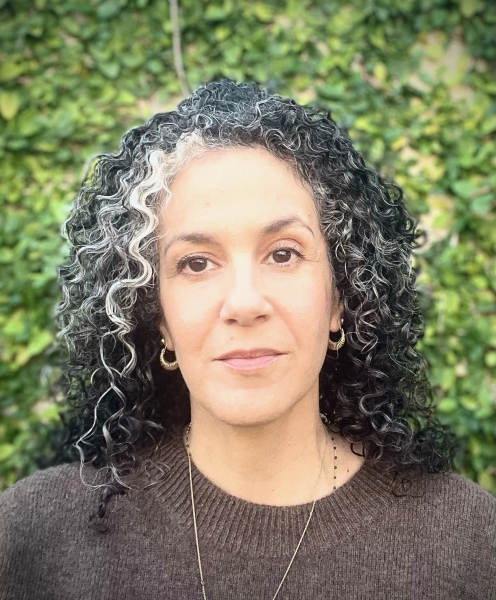
Anat Rubin is an investigative reporter for CalMatters. Her reporting on the criminal justice system has been published by ProPublica and The Marshall Project. She is based in Los Angeles.

Backstory
Q: How did you become interested in this story?
A: I was gathering data for a different story — one about access to investigators in indigent defense — when I learned that 25 of California’s 58 counties don’t have their own public defender office and instead pay private lawyers and firms to represent poor people in criminal cases. Several of these counties contract with a firm whose tactics had earned it a reputation as the WalMart of public defense. The firm appeals to local politicians who want to spend as little as possible defending poor people accused of crimes, and it has grown its business by underbidding the competition.
I wanted to know what this meant for the people the firm represented. Did they have access to investigators who visited crime scenes, chased down surveillance footage and interviewed witnesses? Did their lawyers file legal motions to challenge the prosecution’s evidence? Did they push cases to a jury trial? Those questions provided a roadmap for my reporting.
I also wanted to tell the story of the firm, of the people who built it, and of the broken system in which it operates — one that has turned a constitutional right into a business opportunity.
Q: What is the flat-fee contract model of indigent defense and why has it been banned in some states?
A: Under flat-fee contracts, counties pay private lawyers and firms a fixed amount to represent people accused of crimes, regardless of how many cases they handle or how much work they do on each case. In order to make money off these contracts, attorneys and firms have to cut costs, and that often means less investigating, less litigating, fewer trials.
It’s an arrangement that clearly disincentivizes robust criminal defense work, and that’s why several states have banned it. But flat-fee systems have flourished in California, and as a result, some rural parts of the state more closely resemble the Deep South than they do San Francisco when it comes to criminal justice.
Q: Give us an overview of your investigative strategy?
A: I filed records requests in each of the counties where this firm currently provides public defender services. I received data on staffing, caseloads and trials, and compared it with statewide statistics. I also spent time observing the firm’s lawyers in court, and piecing together the firm’s history in newspaper archives and court documents. I talked to former and current clients and employees.
Q: Why was sheriff Eric Taylor alarmed that contract defenders weren’t challenging his own officers in court?
Sheriff Taylor works in California’s San Benito County, where private lawyers who are paid to provide public defense filed an average of just 10 motions to suppress evidence each year. These motions challenge potential violations of constitutional rights, like unjustified stops and searches, illegal interrogations, arrests without probable cause.
Taylor worried that if his deputies were never challenged in court, they wouldn’t learn when they had crossed a line, and there would be nothing to stop them from doing it again. He had worked for another county where law enforcement officers were routinely called to court to defend their actions, and he believed that the deputies in San Benito needed that level of accountability. They needed someone to tell them when they had gone too far or had made a mistake.
I spoke with top prosecutors who had similar concerns, and it was surprising to hear people in law enforcement say they wanted a stronger opponent in court. It gave me a sense of just how much the public defender system had deteriorated in some of these areas.
Q: Did anything unexpected happen while you were reporting this story?
I was really surprised to learn that the firm had been making political contributions to candidates and legislators who wanted to increase punishments for low-level crimes and expedite executions for people sentenced to death. While the firm’s attorneys were tasked with fighting in court to keep their clients out of jail and prison, the firm was financially supporting politicians who wanted to lock them up. I was also surprised—and grateful—that the firm’s senior partner agreed to meet with me. It allowed me to write a more nuanced story.