The Guardian and AP win September Sidney Award for proving RFK Jr.'s anti-vaccination agenda for Samoa trip
NEW YORK — Michelle Smith of the Guardian and Ali Swenson of the Associated Press win the September Sidney Award for proving that the future Secretary of Health and Human Services, Robert F. Kennedy Jr., travelled to Samoa (Guardian) to pursue his anti-vaccination agenda (AP) months before a deadly measles epidemic claimed the lives of 83 people, mostly children under the age of five. During his confirmation hearings, Kennedy claimed the trip had “nothing to do with vaccines.”
In 2018, two Samoan children died after a nurse mistakenly diluted the measles, mumps, and rubella (MMR) vaccine with a muscle relaxant instead of sterile water. MMR vaccinations were halted for 10 months. By the spring of 2019, vaccinations resumed but vaccine hesitancy was still high. During this time, Kennedy visited Samoa for high-profile meetings with the country’s prime minister and local anti-vaccine activists.
The Department of Health and Human Services continues to deny that the trip was vaccine-related. However, Smith and Swenson obtained correspondence between Kennedy and the prime minister of Samoa in which Kennedy clearly states:
“I would propose my team conduct [a] detailed health informatics assessment in Samoa of what happened with your MMR vaccines,” Kennedy wrote. The prime minister replied that he would be delighted to have Kennedy and his team “conduct an independent assessment of our MMR vaccines.”
“This story proves that Robert F. Kennedy, Jr. did indeed travel to Samoa for a vaccine-related investigation,” said Sidney Judge Lindsay Beyerstein. “The winners uncovered conclusive evidence that Kennedy proposed the trip to study the MMR vaccine and the prime minister welcomed him on those terms.”
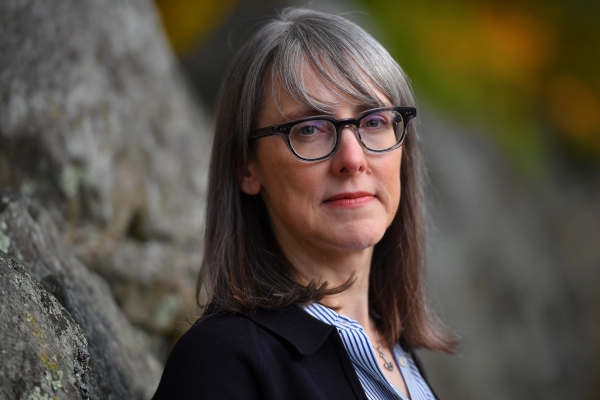
Michelle R. Smith is a senior science investigative reporter at The Guardian, where she focuses on the forces behind attacks on science and public health. She has spent two decades covering subjects including the anti-vaccine movement, extremism and politics and has won numerous awards including a Peabody for the film Michael Flynn’s Holy War, a joint partnership between PBS Frontline and The Associated Press.
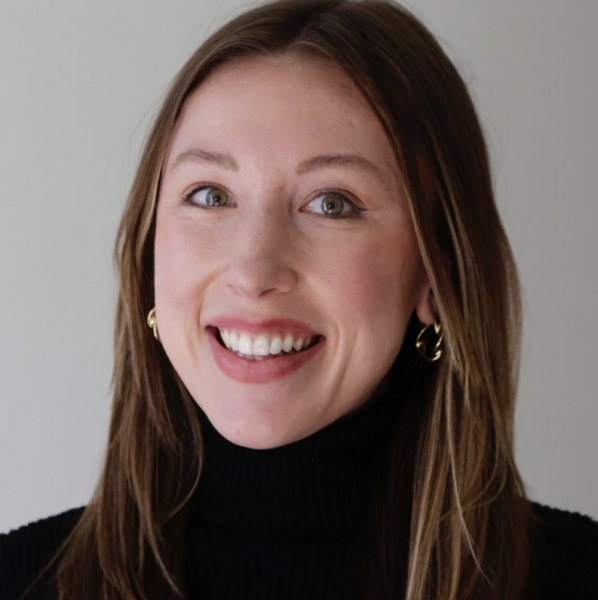
Ali Swenson is an award-winning national politics reporter at The Associated Press, based in New York. Her career focus on accountability journalism has included coverage of federal health policy, election administration, disinformation and extremism.
Backstory
Q: What happened in Samoa in 2019 that kicked off a controversy over the measles, mumps, and rubella vaccine?
Michelle: In 2018, two babies died in Samoa after they were given an improperly-mixed MMR vaccine that was tainted. They died and it set off a panic and two nurses were charged criminally very soon after. There was an investigation and vaccinations were put on hold in the country for about 10 months. By April of the following year, they had resumed, but many people were still very worried about vaccinating their babies.
During that period of time, Robert F. Kennedy Jr. and his anti-vaccine group, Children’s Health Defense, started making outreach to Samoa. Eventually he visited the country and met with the Prime Minister, some health officials, and also with anti-vaccine activists there.
A few months after Kennedy left, there was a big measles outbreak. Thousands of people were sickened, and 83 people died, most of them children under five. Many people in Samoa and health advocates outside of Samoa said that Kennedy’s presence there had bolstered the anti-vaccine movement in Samoa.
Health officials in Samoa and public health advocates have claimed that Kennedy’s presence in Samoa bolstered the credibility of anti-vaccine activists and made it harder for them to get people on board to get their children vaccinated.
Q: What did Robert F. Kennedy, Jr. say in his confirmation hearings that was refuted by his correspondence with the prime minister of Samoa?
Michelle: What happened in Samoa has become one of the most controversial events in Kennedy’s career. It was so controversial that he was asked about it repeatedly in his Senate confirmation hearings last year.
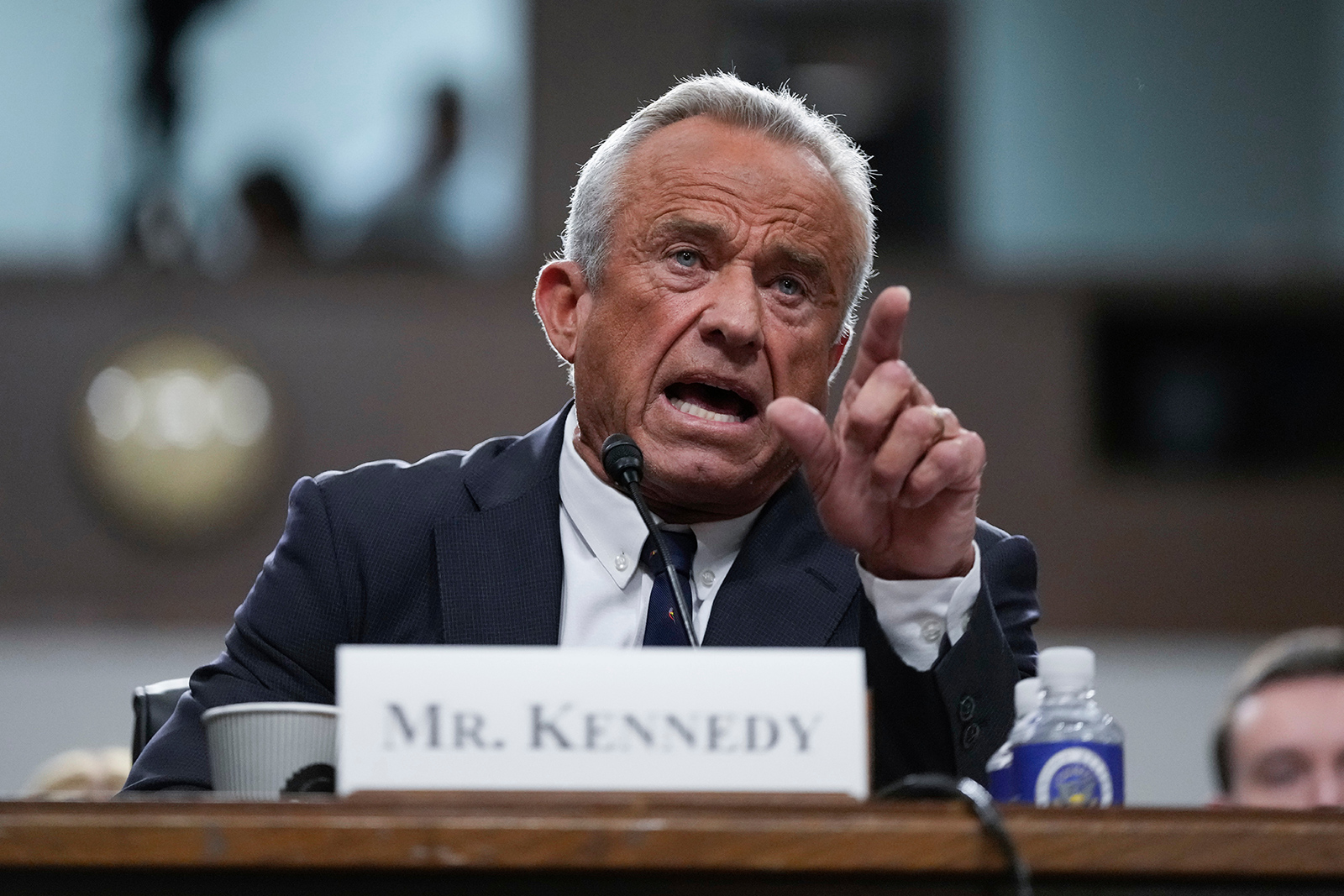
In those confirmation hearings, he said several times that his trip to Samoa had nothing to do with vaccines. This letter that he wrote and the reply that the prime minister wrote to him refutes that. It contradicts what he said before the Senate.
Q: What did RFK Jr. say he was doing in Somoa?
Ali: Kennedy said that he was introducing a medical informatics system to help digitize health records. That’s what he told the Senate. He does reference an informatic system in his letter in January 2019, but he also mentions vaccines or vaccination several times.
Q: What did other sources describe RFK Jr. doing in Samoa?
Michelle: We know from public reporting that he met with the prime minister. There’s a picture of him with the prime minister and [RFK’s] wife, Cheryl Hines, the actress. We also know from public reporting that he met with some health officials there. He said it himself. There are a few pictures of him publicly meeting with different anti-vaccine activists. He has said multiple times the purpose of his trip had nothing to do with vaccines. But the letter itself says that that’s what he has in mind. He wanted to come and Kennedy proposed investigating what had been going on with the MMR vaccine in Samoa.
The prime minister wrote back to him and said: Yes, that would be beneficial for you to come and do an independent review of the MMR vaccine. So from both sides, they’re discussing vaccines being a core part of what this trip is. We also know from other reporting that we’ve done that his colleague who he traveled to Samoa with described it as a vaccine-related “mission.” So there’s ample evidence now from these records that we’ve gotten through FOIA that contradict what he told the Senate.
Ali: I can also add that we know that while Kennedy was in the country, he was treated as a distinguished guest there. He traveled in a government vehicle, he met with the prime minister and other officials. So this was somebody who was a very prominent anti-vaccine activist at the time, visiting Samoa at a time when vaccine hesitancy was high, and he was treated as a distinguished guest.
Q: How did you go about getting the records that proved that Kennedy said some things he shouldn’t have in his confirmation hearings?
Michelle: So actually this started long before he was even considered as HHS secretary. Ali and I were working on a story three years ago and I filed a Freedom of Information Act request with the State Department in September 2023 because I had heard that there was an employee at the State Department in Samoa who had somehow been involved with Kennedy’s trip there. So just on a hunch and kind of a hope that maybe he had used his government email address to help arrange this, I filed this FOIA. They basically ignored me for a very long time and then a year later, a little under a year later, I started following up with them again, trying to get it because by then he was aligning himself with Trump. After Trump was elected, he said that he was considering Kennedy for HHS secretary. I renewed my request to them again, asking where it was. Eventually one of AP’s lawyers wrote a letter to the State Department, and we heard nothing. Finally in July of 2025, Reporters Committee for Freedom of the Press agreed to take this on and sue the Department of State on our behalf to get these records.
Q: RFK wasn’t under oath in his confirmation hearings. Tell us about the implications of that.
Ali: Kennedy was not under oath during his Senate confirmation hearings. However, legal experts have told us that intentionally providing materially false testimony during a confirmation hearing or any other interaction with the Senate can still be prosecuted as a crime. So whether or not someone is under oath, if they lie to the Senate about something material, it can be referred to the Justice Department.
Q: A senator told you that RFK Jr would be a top priority for accountability if the Dems retake the Senate. Who was that Senator and what might accountability look like?
Michelle: Senator Ron Wyden told us that first he called for a criminal investigation into Kennedy. He asked his Republican colleagues to do a referral to the Department of Justice. Senator Wyden is the top Democrat on the Senate Finance Committee and he put Kennedy at the top of the list for what he said would be accountability when Democrats retake the Senate. Those are his words.
Ali: Senator Ron Wyden is the ranking member of the Senate Finance Committee, which means he’s the top Democrat on that committee. So if Democrats retake the Senate, there’s a possibility that he could be leading that committee. If you chair a committee, you are able to hold hearings, initiate legislation, basically determine what the business of that committee is going to be. You can launch investigations, you can bring a member of the administration in for questioning. So there are a lot of levers that you can pull if you want to hold somebody in the administration accountable.
Q: Can you summarize the other impact that your reporting has had so far?
Michelle: Senator Wyden has called for a criminal investigation. Sen. Wyden was one of the senators who questioned RFK, Jr. Another senator who questioned RFK, Jr. about Samoa was Sen. Ed Markey of Massachusetts. He said that Kennedy lied. Various other Democrats and Democratic politicians have said similar things in response to our reporting and have asked him to step down. There’s also a group called American Oversight, which is a government watchdog group. They have filed what’s called a criminal referral to the Justice Department, essentially saying please investigate Kennedy and pulling together the evidence that we reported.
Ali: Justice Department action may not be likely under this administration. It’s also not the only potential recourse that could come out of this. If the Senate or the House changes hands, we could see action in Congress responding to this.
Q: Tell me more about what you went through to get this letter.
Michelle: It took almost three years to get these records and we had to file a lawsuit in federal court and wait for so long.
When we filed this FOIA, Kennedy was running for president. I mean, it’s so long ago. It shouldn’t take that long. There are so many FOIA’s that reporters like us are waiting on that can shed light on powerful people and how they operate and their record and the actions of government officials that may never see the light of day. We were lucky to get the Reporters’ Committee to help us. But there are limited resources for the Reporters’ Committee. It’s so important to support these groups that are doing this, but also to demand that these kinds of records are released because they’re public records.
Ali: I’ll just add that responsive records to Michelle’s requests came in over a period of several months. We got the first records in January and the final records in August. As Michelle said, we knew that these letters existed because they had been referenced in previous emails. And we actually had to ask specifically for these letters because we didn’t receive them in the tranches that we got from the State Department. So it required a lot of patience and persistence. In the end, it was worth the wait.
Michelle: I’ll just add that we are actually still waiting. There are still some records we haven’t received yet which we are hoping to receive soon. But who knows? Hopefully we’ll get them before the next election.