

2026 Hillman Prize for Book Journalism
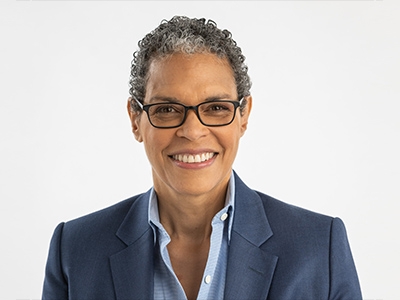
Michelle Adams
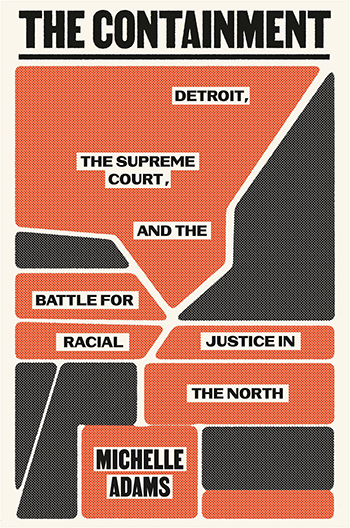 In the 1970s, Detroit was at the center of a legal and historical drama that exposes the roots of today’s backlash against affirmative action and DEI initiatives.
Legal scholar Michelle Adams chronicles the story in her compelling book The Containment: Detroit, the Supreme Court, and the Battle for Racial Justice in the North.
Detroit was a city under stress. Due to a longstanding policy of “containment,” its urban neighborhoods were 95 percent Black, and suburban neighborhoods were 99 percent white. Same for its schools.
The U.S. Supreme Court had brought an end to racial segregation two decades earlier through its ruling in Brown v. Board of Education. The Court had declared it was unconstitutional to separate white and Black students. Yet, segregation was a reality in Detroit, but not through laws and regulations such as “whites only” signs or official school policy.
Detroit had a system of racially separate real estate brokerages. Black agents had no access to white listings, and they were restricted to showing homes in Black areas. There was a neighborhood school model, which meant that Blacks and whites in Detroit went to separate schools in their separate neighborhoods. Blacks were not legally barred from attending white schools; they simply did not live in a white neighborhood.
Adams cites research showing that “students in racially and socioeconomically integrated schools and classrooms have stronger academic outcomes and higher test scores, are more likely to enroll in college, have higher earnings and health outcomes as adults, and are less likely to become incarcerated.”
The Containment portrays the devoted activists who fought for change. The local chapter of the NAACP filed a landmark class-action lawsuit, Milliken v Bradley, in federal court in 1970, naming the Republican governor of Michigan, William Milliken, as the defendant.
In a 41-day trial, lawyers demonstrated to district judge Stephen Roth that Blacks didn’t just happen to live in particular neighborhoods, they were “contained” there.
Working-class, inner-city whites argued that it wasn’t fair that they had to integrate, but the whites who could afford to move to the suburbs did not.
Judge Roth agreed. In June 1972, he ordered a broad integration plan to bus students between the city and the prosperous suburbs, placing them in the same metropolitan school district as Detroit. His “metropolitan remedy” had the potential to redraw the landscape of racial justice. But suburban whites were outraged.
Richard Nixon, running for re-election, demanded “an immediate halt to all new busing orders by federal courts.”
By 1974, he had placed four new justices on the Supreme Court who formed the core of the 5-to-4 majority that overturned Judge Roth’s desegregation plan. The grounds were that the Constitution compelled states to remedy only segregation that had been instituted by law. Adams describes Chief Justice Warren Burger’s majority opinion as “grounded in white innocence.”
The ruling cemented educational inequality in the Northern and Western U.S. and shaped an enduring resistance to affirmative action and civil rights reforms. Integration remains under siege today, as we witness the Trump administration and the Trump court whitewashing history, attacking diversity programs, and declaring that race-conscious admissions programs are unconstitutional.
Michelle Adams is the Henry M. Butzel Professor of Law at the University of Michigan. The former codirector of the Floersheimer Center for Constitutional Democracy at the Benjamin N. Cardozo School of Law, she served on the Biden administration’s Presidential Commission on the Supreme Court and as an expert commentator on the Netflix series Amend: The Fight for America and the Showtime series Deadlocked: How America Shaped the Supreme Court. Her writings have appeared in The New Yorker, The Yale Law Journal, California Law Review, and elsewhere. She was born and grew up in Detroit.