

2026 Hillman Prize for Opinion & Analysis Journalism
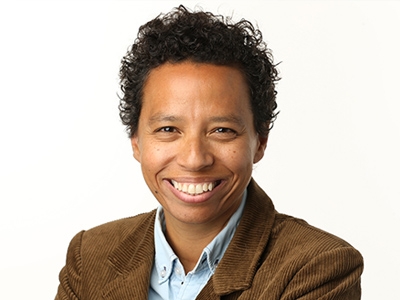
Lydia Polgreen
Lydia Polgreen, Opinion columnist for The New York Times, has been trying to make sense of our current era of anti-migration.
“If there was a zero hour, it came in 2015, when more than a million migrants sought refuge in Europe, many seeking to cross the Mediterranean in rickety boats,” she writes.
With Britain’s vote to leave the European Union in 2016 as well as Donald Trump’s election, anti-immigrant sentiment has become a central organizing principle of politicians.
Polgreen crafted a seven-part series of columns about human movement and a world in flux, in which she argues that migration is an unpredictable engine of dynamism and change, one that nations ignore at their own peril.

She traveled to South Africa, to Dubai, to Sweden, and finally to Syria where war forced more than six million people into exile–hundreds of thousands of whom have been returning home since the fall of President Bashar al-Assad.
The West no longer holds a monopoly on migrants’ desires. Polgreen notes that aspirational, educated people are increasingly bypassing the West for emerging hubs like Dubai. Migrants have agency over their destiny, proving that human progress is tied inextricably to movement.
Whether people are fleeing their home country in haste due to political turmoil or to pursue a better life, most tend to stay within their own region or continent, observes Polgreen. The median distance that most migrants travel is less than 400 miles. While many nations are xenophobic about immigrants, she says Dubai has adopted a welcoming environment, encouraging people to come not just to work for a few years, but to build a new life there.
Her column about Sugar Land, Texas, portrayed communities that are reevaluating their place in the United States. An East Indian doctor who has lived there for more than 50 years has faced an astonishing wave of anti-Indian hostility. Polgreen writes: “For decades, Indian students with degrees in highly sought-after technical fields have followed a glide path to a life in the United States…Now it is all but blocked.”
As birthrates plummet in Europe and the West, Polgreen cautions that hostility toward immigrants is self-defeating. We are cutting off the vital economic contributions of the very people we need to revitalize Western economies. Country after country in the wealthy world is facing a top-heavy future. Although we want to sustain current standards of living, we have millions of retirees and far too few workers to keep economies and societies afloat.
Polgreen tells us that migration is not solely a Western problem. She persuades the reader that the West will soon have to compete for the very migrants it is now trying to expel. In response to rising anti-immigrant sentiment, Western governments are enacting harsh deportation policies, and Polgreen writes they may live to regret it: “In the coming decades, many countries that are hellbent on excluding migrants are likely to find themselves in a pitched competition to attract them.”
Lydia Polgreen is an Opinion columnist at The New York Times. She writes about the world, culture and politics, with an emphasis on human rights, migration, queer lives and democracy.
Polgreen spent a decade as an international correspondent for The Times in West Africa, South Asia and South Africa. She was editor in chief of HuffPost and managing director of Gimlet, a podcast studio at Spotify. Before joining The Times, she was a staff writer for The Orlando Sentinel and The Times Union in Albany, N.Y.
Her mother is Ethiopian and her father was American, and she spent most of her childhood and a good chunk of her professional life in Africa. These experiences inform her perspective and work.
Polgreen has a bachelor of arts degree in philosophy and mathematics from Saint John’s College, and attended the Columbia University Graduate School of Journalism. She is also the recipient of the George Polk and Livingston awards for international reporting.