

2026 SEIU Award for Reporting on Racial and Economic Justice
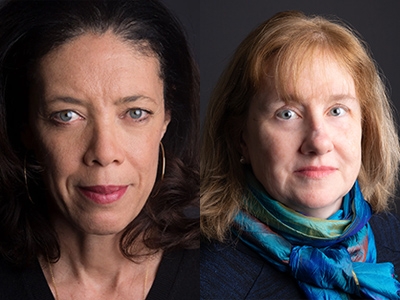
Ginger Thompson and Doris Burke
Why were the residents so sick, when the most powerful institution in town was a hospital? That question guided Ginger Thompson on a new quest, even though she had traveled to Albany, Georgia, to tell a different story.
Thompson arrived in Albany in early 2020 because this small majority-Black community had made headlines as a COVID-19 hotspot. Albany had the world’s fourth-highest per capita case rate of the virus, and Phoebe Putney Memorial, the city’s only hospital, was ground zero.
What Thompson found was something larger—a story about race, money and power. Since the 1990s, Albany’s residents have suffered some of the highest death rates from heart and kidney disease in the state, some of the highest rates of diabetes in the country, and low rates of life expectancy.
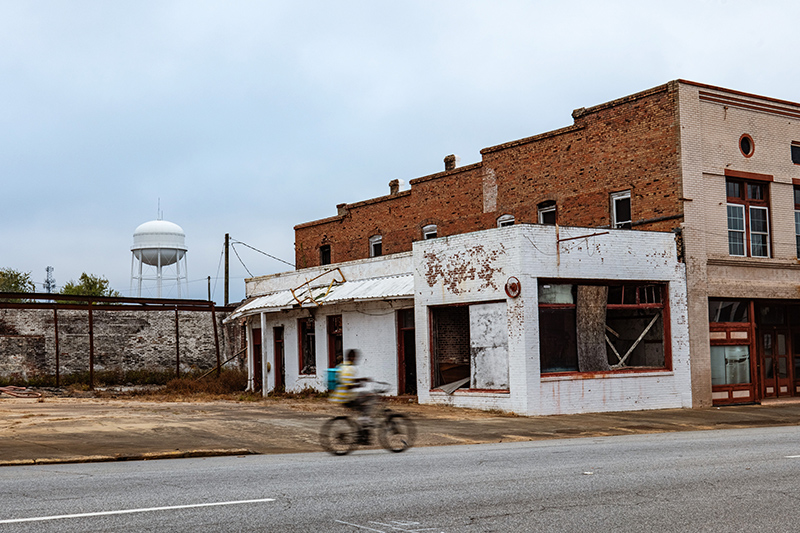
Unlike other communities of its size, Albany has Phoebe, a self-proclaimed “world-class health system” that, over the past three decades, has grown into the largest provider of health care in southwest Georgia. It is also the town’s largest employer.
However, as Phoebe aggressively expanded to become a monopoly, Albany became poorer and sicker. Thompson conducted interviews with more than 150 current and former residents, 75 current and former staff members of the Phoebe Putney Health System, and dozens of public health professionals and medical and legal experts.
With health care such a large portion of the U.S economy, there are now numerous cities like Albany. They are hospital towns, not unlike coal towns and mill towns where, for much of the 20th century, a single enterprise dominated almost every aspect of life.
With meticulous research from Doris Burke, Thompson traces how Phoebe became the dominant political and economic institution of Albany, how its practices led to some of the highest health insurance premiums in the country, and how it silenced its critics. She discovered that residents, as well as current and former employees, were afraid to criticize Phoebe on the record, and hesitant to hold the hospital to account.
“Sick in a Hospital Town” rests on a bedrock of data, but Thompson presents portraits of Albany residents who have interacted with Phoebe. In particular, she weaves the experience of Anthony and Sandra Parker through her story, prominent figures in the community who believed in the hospital. Anthony, a member of Phoebe’s board of directors, checked in for a routine, elective procedure in 2022, yet even his well-known, well-off, widely respected status did not protect him. He was subject to the same systemic issues and alarming and inexplicable lapses in care that had been endemic to the hospital for more than two decades. If he couldn’t get good care at Phoebe, who could?
Thompson’s investigation is laced with stories of patient neglect, and carelessness. Nurses described crisis staffing levels; they told of doctors who did not take their calls; and described stock rooms that had run out of supplies.
With lower-quality care came mounting costs. Southwest Georgia became one of the most expensive health insurance regions in the country, second only to areas around Vail and Aspen, Colorado.
At once epic and intimate, raw and elegant, “Sick in a Hospital Town” takes on two of the most powerful forces shaping American society—race and health care—and how they affect us in profound and unsettling ways.
Ginger Thompson is a managing editor at ProPublica. She previously spent 15 years at The New York Times as the Mexico City bureau chief and as an investigative reporter. Her work has exposed the consequences of Washington’s policies in Latin America, particularly policies involving immigration, political upheaval and the fight against drug cartels. Thompson also served as a Latin America correspondent at The Baltimore Sun, where she co-wrote a series of stories about U.S. support for a secret Honduran military unit that kidnapped, tortured and murdered hundreds of suspected leftists; work that was a finalist for the Pulitzer Prize. She also parachuted into breaking news events across the region, including Cuba, Haiti and Venezuela. Her work has won the Maria Moors Cabot Prize, the Selden Ring Award for investigative reporting, an InterAmerican Press Association Award, and an Overseas Press Club Award. She was part of a team of national reporters at The Times that was awarded a 2000 Pulitzer Prize for the series “How Race is Lived in America.” She was also part of a team of reporters at ProPublica whose coverage of the Trump Administration’s Zero Tolerance policy won numerous other awards, including a Polk Award, a Peabody Award, a Tobenkin Prize, and was a finalist for the Pulitzer Prize for public service. Thompson graduated from Purdue University, where she was managing editor of the campus newspaper, The Exponent. She earned a Master of Public Policy from George Washington University, with a focus on human rights law.
Doris Burke is senior research reporter at ProPublica. Prior to joining ProPublica in 2019, she was a researcher at The New York Times working on investigative and daily stories. While at Fortune magazine, she collaborated on award-winning financial crime stories. Before moving to journalism, she was research librarian at several investment banks. She has a history degree from St. Bonaventure University and a library science degree from Pratt Institute.